
Leadless pacemakers don’t require any surgical intervention: Doctor
- News Articles
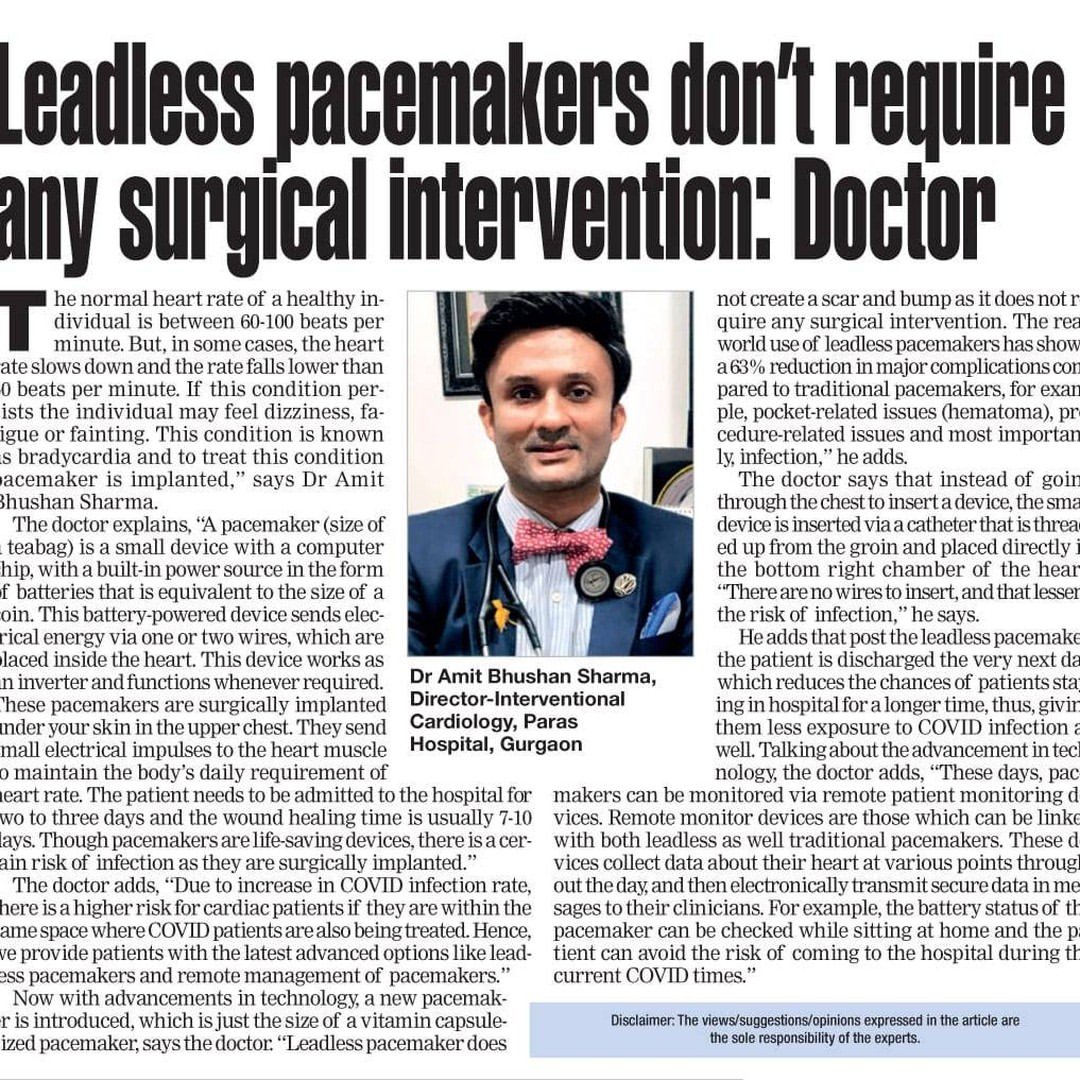
The normal heart rate of a healthy individual is between 60–100 beats per minute. But, in some cases, the heart rate slows down and falls lower than 60 beats per minute. If this condition persists, the individual may feel dizziness, fatigue or fainting. This condition is known as bradycardia and to treat this condition a pacemaker is implanted,” says Dr Amit Bhushan Sharma.
The doctor explains, “A pacemaker (size of a teabag) is a small device with a computer chip, with a built-in power source in the form of batteries that is equivalent to the size of a coin. This battery-powered device sends electrical energy via one or two wires, which are placed inside the heart. This device works as an inverter and functions whenever required. These pacemakers are surgically implanted under your skin in the upper chest. They send small electrical impulses to the heart muscle to maintain the body’s daily requirement of heart rate. The patient needs to be admitted to the hospital for two to three days and the wound healing time is usually 7–10 days. Though pacemakers are life-saving devices, there is a certain risk of infection as they are surgically implanted.”
The doctor adds, “Due to the increase in COVID infection rate, there is a higher risk for cardiac patients if they are within the same space where COVID patients are also being treated. Hence, we provide patients with the
latest advanced options like leadless pacemakers and remote management of pacemakers.”
Now with advancements in technology, a new pacemaker has been introduced, which is just the size of a vitamin capsule. This is called a leadless pacemaker, says the doctor.
“Leadless pacemakers do not create a scar or bump as they do not require any surgical intervention. Research from around the world shows that leadless pacemakers have demonstrated a 63% reduction in major complications compared to traditional pacemakers, such as pocket-related issues (hematoma), procedure-related complications and, most importantly, infection,” he adds.
The doctor says that instead of going through the chest to insert a device, the small device is inserted via a catheter that is threaded up from the groin and placed directly into the bottom right chamber of the heart.
“There are no wires to insert, and that lessens the risk of infection,” he says.
He adds that after receiving a leadless pacemaker, the patient is discharged the very next day, reducing the chances of staying in the hospital for a longer time and thereby minimizing exposure to COVID infection.
Talking about advancements in technology, the doctor adds, “These days, pacemakers can be monitored via remote patient monitoring devices. Remote monitor devices can be linked with both leadless as well as traditional pacemakers. These devices collect data about the heart at various points throughout the day and then electronically transmit secure data and messages to clinicians.
For example, the battery status of the pacemaker can be checked while the patient is sitting at home, allowing them to avoid unnecessary hospital visits during the current COVID times.”
Dr Amit Bhushan Sharma
Director – Interventional Cardiology
Paras Hospital, Gurgaon