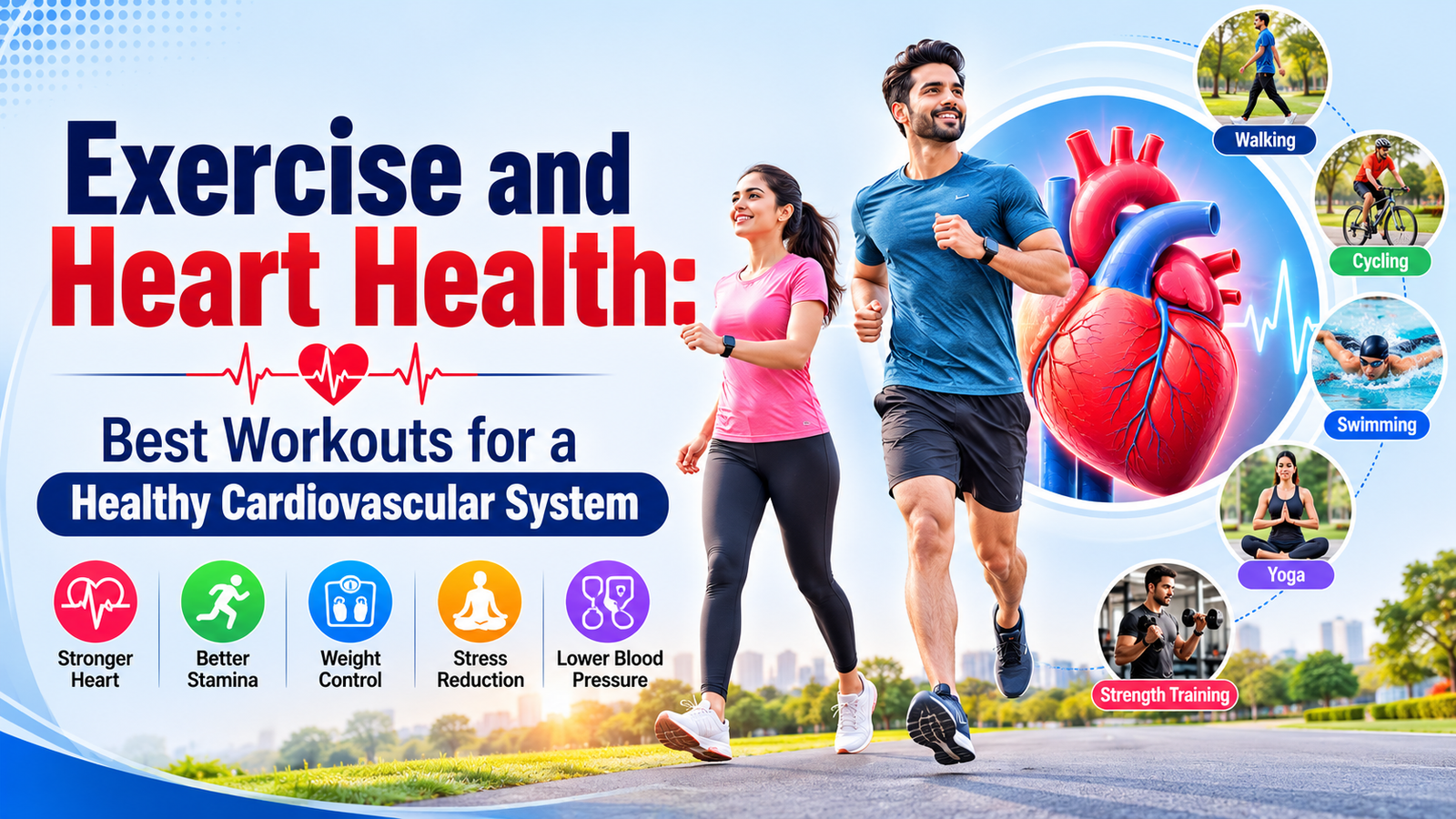
Heart disease remains one of the leading causes of illness and death worldwide, but the good news is that regular physical activity is one of the most effective ways to protect your heart. Exercise strengthens the heart muscle, improves blood circulation, helps control blood pressure, reduces cholesterol levels, and lowers the risk of heart attack and stroke.
As a cardiologist, I often tell my patients that you don’t need to become a marathon runner to have a healthy heart. The key is choosing the right type of exercise and performing it consistently.
In this blog, let’s understand how exercise benefits your cardiovascular system and which workouts are best for maintaining a healthy heart.
Why Exercise is Essential for Heart Health?
Your heart is a muscle, and like every other muscle in your body, it becomes stronger with regular exercise.
Regular physical activity helps:
- Improve blood circulation
- Lower blood pressure
- Reduce LDL (bad cholesterol)
- Increase HDL (good cholesterol)
- Improve blood sugar control
- Reduce body weight
- Decrease inflammation
- Lower stress and anxiety
- Improve sleep quality
- Reduce the risk of heart disease by up to 35%
Even 30 minutes of moderate exercise most days of the week can significantly improve heart health.
Best Exercises for a Healthy Cardiovascular System
1. Brisk Walking
Walking is one of the safest and most effective exercises for people of all ages.
Benefits
- Improves heart function
- Helps control blood pressure
- Burns calories
- Easy on joints
- Suitable for beginners
Recommended Duration
- 30–45 minutes
- At least 5 days per week
Walking at a pace where you can talk but not sing is considered ideal for cardiovascular fitness.
2. Cycling
Cycling is excellent for improving cardiovascular endurance while being gentle on the knees.
Benefits
- Strengthens the heart
- Improves lung capacity
- Burns fat
- Builds lower-body muscles
Aim for:
- 30–60 minutes
- 3–5 days weekly
Outdoor cycling or stationary bikes both offer excellent cardiovascular benefits.
3. Swimming
Swimming provides a full-body workout and is especially beneficial for individuals with arthritis or obesity.
Benefits
- Improves heart efficiency
- Enhances lung function
- Reduces joint stress
- Builds muscle endurance
Recommended:
- 30–45 minutes
- 3–4 sessions weekly
4. Jogging or Running
For those who are physically fit and have no medical restrictions, jogging or running significantly improves cardiovascular endurance.
Benefits include:
- Stronger heart muscle
- Better circulation
- Improved oxygen utilization
- Weight management
Start slowly and gradually increase intensity.
Patients with existing heart disease should consult their cardiologist before beginning a running program.
5. Strength Training
Resistance exercises are often overlooked but are equally important.
Strength training helps:
- Increase muscle mass
- Improve metabolism
- Reduce body fat
- Improve blood sugar control
- Support healthy blood pressure
Examples include:
- Resistance bands
- Dumbbells
- Bodyweight exercises
- Weight machines
Perform strength training:
- 2–3 days per week
6. Yoga
Yoga improves both physical and mental health.
Benefits include:
- Reduced stress hormones
- Lower blood pressure
- Improved flexibility
- Better breathing
- Improved heart rate variability
Practices such as Pranayama and meditation are especially beneficial for cardiovascular wellness.
7. Dancing
Dance workouts combine fun with fitness.
Benefits include:
- Improved cardiovascular endurance
- Better coordination
- Weight loss
- Stress reduction
The best exercise is the one you’ll enjoy enough to continue regularly.
How Much Exercise Do You Need?
The American Heart Association recommends:
- 150 minutes of moderate-intensity aerobic exercise per week, or
- 75 minutes of vigorous exercise weekly
Additionally:
- Strength training at least 2 days per week
- Daily stretching and flexibility exercises
Breaking exercise into 30-minute sessions, five days a week, is an excellent goal for most adults.
Warning Signs During Exercise
Stop exercising immediately and seek medical attention if you experience:
- Chest pain
- Severe shortness of breath
- Dizziness
- Fainting
- Irregular heartbeat
- Pain radiating to the jaw or left arm
- Excessive sweating accompanied by discomfort
These symptoms could indicate a heart-related problem requiring prompt evaluation.
Tips for Exercising Safely
- Warm up for 5–10 minutes before exercising.
- Cool down after every workout.
- Stay hydrated.
- Wear comfortable footwear.
- Avoid exercising immediately after heavy meals.
- Exercise during cooler parts of the day in hot weather.
- Increase intensity gradually.
- Listen to your body and avoid overexertion.
Exercise for People with Heart Disease
If you have:
- High blood pressure
- Diabetes
- Previous heart attack
- Heart failure
- Coronary artery disease
- Arrhythmias
Always consult a cardiologist before starting a new exercise routine. A personalized cardiac rehabilitation or supervised exercise plan can help you exercise safely and effectively.
Lifestyle Habits That Complement Exercise
Exercise works best when combined with other heart-healthy habits:
- Eat a balanced diet rich in fruits, vegetables, whole grains, and lean proteins.
- Limit salt, sugar, and saturated fats.
- Avoid smoking and tobacco use.
- Limit alcohol intake.
- Maintain a healthy weight.
- Get 7–8 hours of quality sleep.
- Manage stress through mindfulness or relaxation techniques.
- Schedule regular heart health check-ups.
Together, these lifestyle choices can significantly reduce your risk of cardiovascular disease.
Final Thoughts
Exercise is one of the most powerful medicines for your heart. Whether it’s a brisk walk, cycling, swimming, yoga, or strength training, staying physically active can dramatically improve cardiovascular health and reduce the risk of heart disease.
Remember, consistency matters more than intensity. Start with activities you enjoy, make exercise a part of your daily routine, and gradually build your fitness. If you have existing heart conditions or risk factors, consult your cardiologist before beginning a new workout program.
Your heart works tirelessly for you every day—give it the care it deserves through regular exercise and a heart-healthy lifestyle.