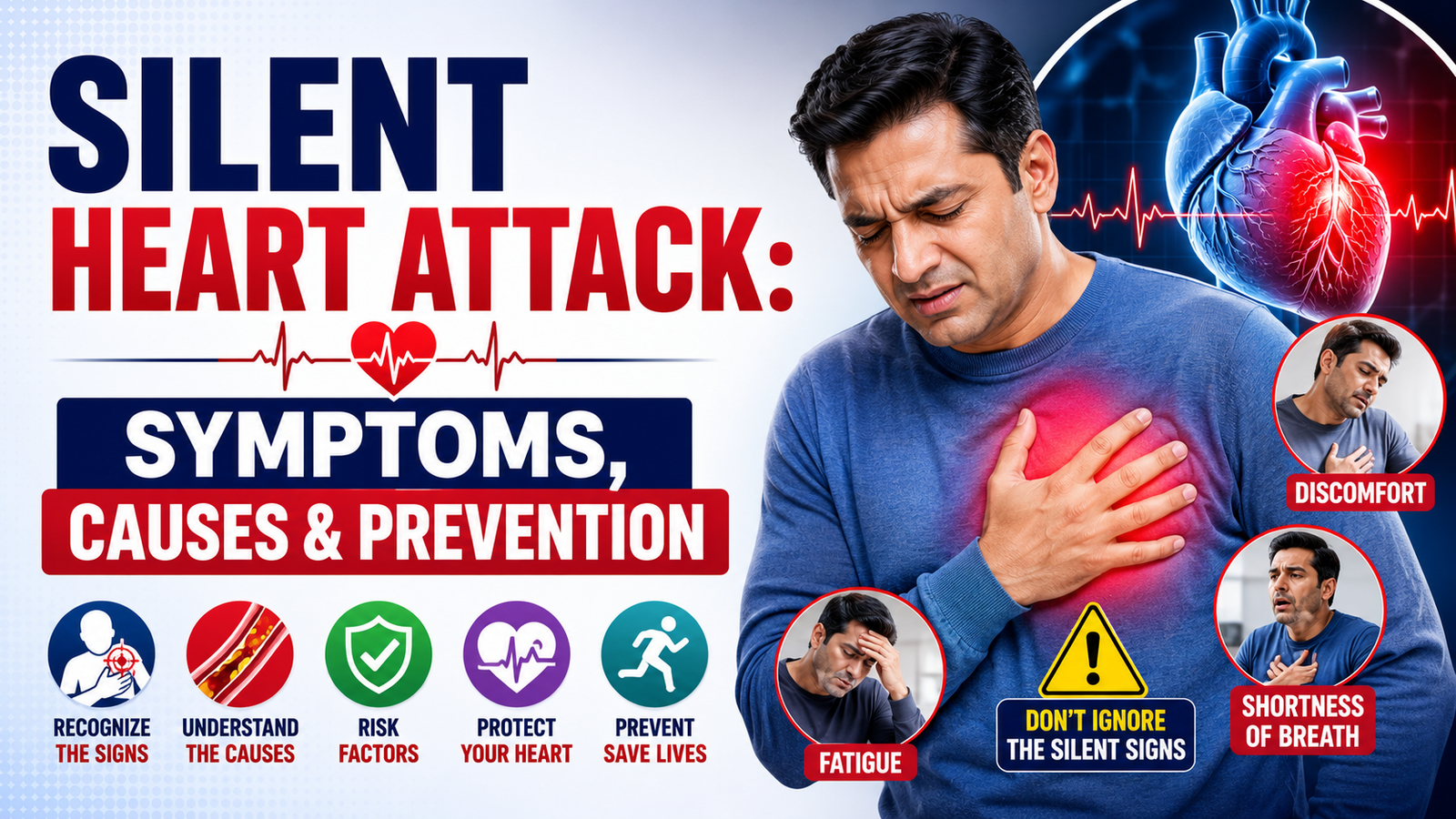
Heart attacks are often associated with sudden, severe chest pain that demands immediate medical attention. However, not all heart attacks occur with dramatic symptoms. Some happen quietly, with mild or unusual signs that are often mistaken for indigestion, fatigue, or muscle strain. These are known as silent heart attacks.
Despite their subtle presentation, silent heart attacks can be just as dangerous as traditional heart attacks. Many people remain unaware that they have experienced one until it is discovered during a routine medical examination or after complications develop.
In this article, we’ll discuss what a silent heart attack is, its symptoms, causes, risk factors, diagnosis, treatment, and most importantly, how you can prevent it.
What is a Silent Heart Attack?
A silent heart attack, also called a silent myocardial infarction (SMI), occurs when blood flow to a part of the heart muscle is blocked, causing damage to the heart tissue—but without the classic symptoms typically associated with a heart attack.
Because the symptoms are mild, vague, or absent, many people do not seek medical attention, increasing the risk of long-term heart damage.
Why is it Called “Silent”?
Unlike a typical heart attack that causes intense chest pain, a silent heart attack may produce symptoms that are:
- Mild
- Short-lived
- Easily ignored
- Mistaken for other health conditions
As a result, patients often continue with their daily activities without realizing that their heart has been damaged.
Common Symptoms of a Silent Heart Attack
Although symptoms are less obvious, they should never be ignored.
Possible warning signs include:
Mild Chest Discomfort
Rather than severe pain, patients may experience:
- Pressure
- Tightness
- Burning sensation
- Mild heaviness in the chest
Unexplained Fatigue
Feeling unusually tired for several days or weeks without any clear reason can be an early sign.
Shortness of Breath
Difficulty breathing during routine activities or while resting may indicate reduced heart function.
Pain in Other Areas
Discomfort may occur in:
- Left or right arm
- Neck
- Jaw
- Shoulder
- Upper back
These symptoms are often mistaken for muscle pain.
Indigestion or Heartburn
Some people experience:
- Nausea
- Stomach discomfort
- Acid reflux-like symptoms
Many assume these symptoms are related to digestive issues rather than the heart.
Excessive Sweating
Unexpected cold sweats without physical exertion can be a warning sign.
Dizziness or Lightheadedness
Reduced blood flow caused by heart muscle damage may lead to:
- Dizziness
- Weakness
- Feeling faint
Causes of a Silent Heart Attack
The underlying cause is the same as a traditional heart attack.
Most silent heart attacks occur due to:
Coronary Artery Disease
Fatty deposits (plaques) build up inside the coronary arteries, reducing blood flow.
Blood Clot Formation
If a plaque ruptures, a blood clot may completely block the artery supplying the heart muscle.
Reduced Oxygen Supply
The blocked artery prevents oxygen-rich blood from reaching part of the heart, causing permanent damage if not treated promptly.
Who is at Higher Risk?
Certain individuals are more likely to experience a silent heart attack.
Risk factors include:
- High blood pressure
- Diabetes
- High cholesterol
- Smoking
- Obesity
- Physical inactivity
- Family history of heart disease
- Chronic kidney disease
- Stress
- Older age
- Previous heart disease
People with diabetes are particularly vulnerable because nerve damage (diabetic neuropathy) can reduce the perception of chest pain.
Why Silent Heart Attacks are Dangerous
A silent heart attack can be just as serious as a classic heart attack because it often goes untreated.
Potential complications include:
- Heart failure
- Irregular heart rhythms (arrhythmias)
- Reduced pumping ability of the heart
- Future major heart attacks
- Sudden cardiac arrest
- Increased risk of stroke
Early diagnosis is critical to prevent these complications.
How is a Silent Heart Attack Diagnosed?
Many silent heart attacks are discovered incidentally during routine evaluations.
Your cardiologist may recommend:
Electrocardiogram (ECG)
An ECG can detect electrical changes that suggest a previous heart attack.
Echocardiogram
This ultrasound of the heart evaluates:
- Heart muscle movement
- Valve function
- Pumping efficiency
Cardiac Blood Tests
Troponin levels help confirm recent heart muscle injury when evaluated promptly.
Stress Test
A stress test assesses how well your heart performs during physical activity and can identify areas with reduced blood flow.
Coronary Angiography
In some patients, angiography is performed to identify blockages in the coronary arteries and guide treatment decisions.
Treatment of a Silent Heart Attack
Treatment depends on the severity of heart damage and the extent of coronary artery disease.
Medications
Your cardiologist may prescribe:
- Antiplatelet medications
- Cholesterol-lowering medications (statins)
- Blood pressure medications
- Beta-blockers
- ACE inhibitors or ARBs
- Blood-thinning medications when indicated
Coronary Angioplasty (PCI)
If a significant blockage is identified, angioplasty with stent placement may be recommended to restore blood flow.
Coronary Artery Bypass Surgery (CABG)
Patients with multiple severe blockages may require bypass surgery to improve blood flow to the heart.
Cardiac Rehabilitation
A supervised rehabilitation program includes:
- Safe exercise training
- Nutritional counseling
- Risk factor management
- Lifestyle modification
- Emotional support
Cardiac rehabilitation plays a key role in reducing the risk of future cardiac events.
How Can You Prevent a Silent Heart Attack?
The good news is that many silent heart attacks are preventable through healthy lifestyle choices and regular medical care.
Exercise Regularly
Aim for at least 150 minutes of moderate-intensity physical activity every week.
Activities such as brisk walking, cycling, swimming, and yoga are excellent for heart health.
Eat a Heart-Healthy Diet
Choose foods that support cardiovascular health:
- Fresh fruits and vegetables
- Whole grains
- Lean proteins
- Healthy fats from nuts, seeds, and olive oil
Limit:
- Salt
- Sugary foods
- Processed foods
- Saturated and trans fats
Quit Smoking
Smoking damages blood vessels, accelerates plaque buildup, and significantly increases the risk of heart attacks.
Control Blood Pressure
Regular monitoring and appropriate treatment can greatly reduce cardiovascular risk.
Manage Diabetes
Keeping blood sugar levels under control helps prevent damage to blood vessels and nerves.
Maintain Healthy Cholesterol Levels
Regular screening and lifestyle changes, along with medication when necessary, help reduce plaque buildup in the arteries.
Manage Stress
Chronic stress contributes to high blood pressure and unhealthy lifestyle habits.
Practice:
- Meditation
- Deep breathing exercises
- Yoga
- Adequate sleep
- Mindfulness techniques
Schedule Regular Heart Check-ups
Routine cardiac evaluations can detect heart disease before symptoms develop, especially if you have risk factors such as diabetes, hypertension, or a family history of heart disease.
When Should You Seek Immediate Medical Attention?
Do not ignore symptoms such as:
- Chest discomfort or pressure
- Sudden breathlessness
- Pain spreading to the arm, jaw, neck, or back
- Cold sweats
- Unexplained fatigue
- Dizziness or fainting
- Nausea accompanied by chest discomfort
Even if the symptoms are mild, prompt evaluation can save heart muscle and reduce the risk of life-threatening complications.